Connecting a modern HDMI device to an older television with only a coaxial input requires an HDMI to RF Modulator or HDMI to Coax Converter, not a simple HDMI to coax cable. This device translates the digital HDMI signal into an analog radio frequency (RF) signal, typically outputting in standard definition (480i) on Channel 3 or 4, allowing older TVs to display content from new streaming sticks or gaming consoles.
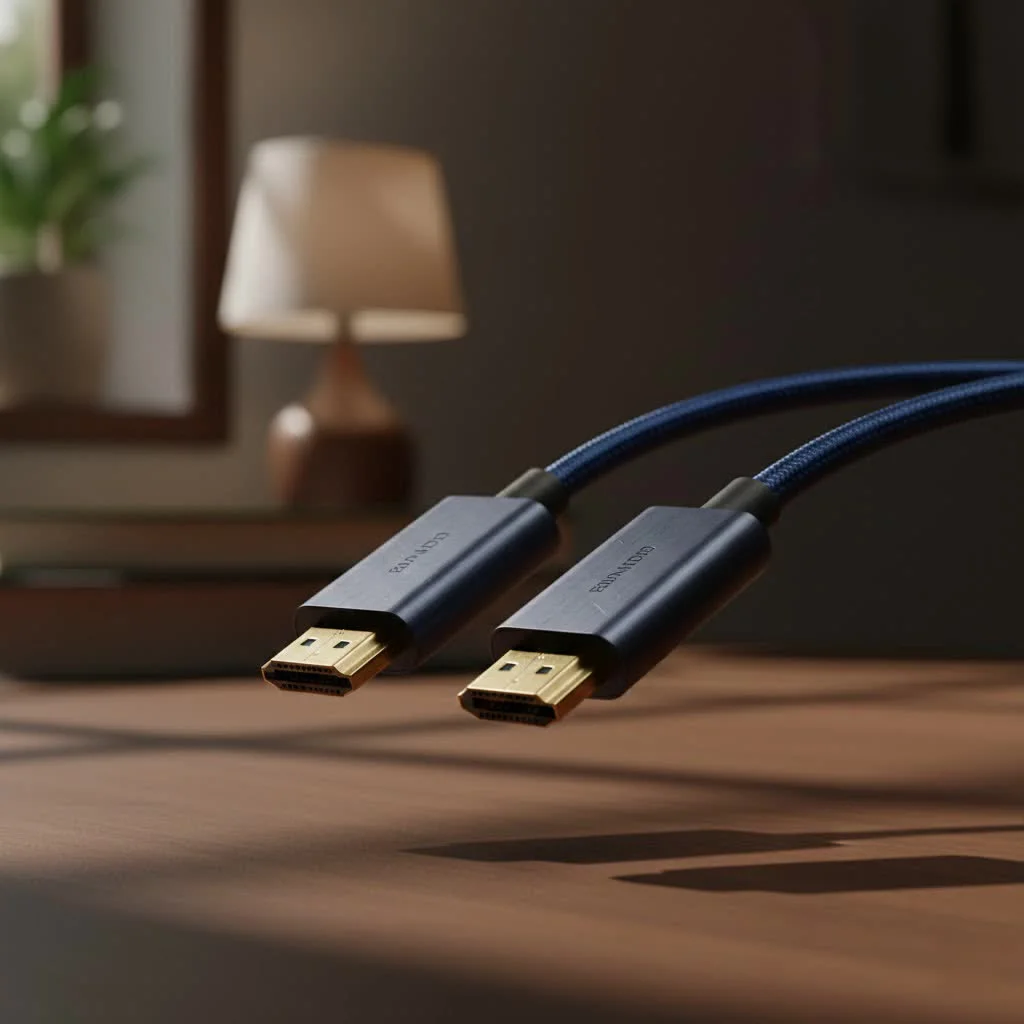
This guide will walk you through exactly what you need, how it works, and what to expect, ensuring you can make an informed decision without getting tangled in technical jargon.
What is an HDMI to Coax Converter, Really?
First things first, a simple “cable” that connects HDMI to coax doesn’t exist. The two formats are like different languages. HDMI is a modern digital signal, carrying pristine high-definition video and multi-channel audio. Coaxial, on the other hand, is an old-school analog signal, the kind used for traditional over-the-air broadcast TV. You can’t just connect wires between them and hope they understand each other.
What you actually need is a device called an HDMI to RF Modulator or HDMI to Coax Converter. Think of this little box as a real-time translator.
It takes the high-quality digital information from your HDMI source, like a Blu-ray player or Apple TV, and converts (or “modulates”) it into an analog radio frequency (RF) signal. This RF signal is then sent out through the coaxial cable, which your older TV can tune into just like it was a classic television channel.
The converter creates a mini, low-power TV station in your home, broadcasting on a specific channel that only your connected TV is meant to pick up.
Why a Simple Cable Won’t Work: Digital vs. Analog
Understanding the core difference between these two signals is key to grasping why you need a converter box.
- HDMI (Digital): This is a complex signal made of ones and zeros. It carries vast amounts of data, including 1080p or 4K video, surround sound audio, and even copy protection protocols like HDCP (High-bandwidth Digital Content Protection).
- Coaxial (Analog): This is a continuous wave that varies in frequency and amplitude to represent video and audio information. It has far less bandwidth and cannot carry the pure data needed for a high-definition picture or digital audio.
A passive cable can only pass electrical signals from one end to the other. It has no “brain” to perform the complicated task of reading the digital data, decompressing it, and then recreating it as a completely different analog wave. That’s the job of the active electronics inside the modulator box.
How to Choose the Right HDMI to Coax Converter
When you start shopping for a converter, you’ll see they are relatively simple devices. However, there are a few key features to be aware of to ensure you get one that works for your setup.
Resolution: Managing Your Expectations
|
Our Picks for the Best HDMI Cable in 2026
As an Amazon Associate I earn from qualifying purchases.
|
||
| Num | Product | Action |
|---|---|---|
| 1 | 15 Pack of 10 Foot hdmi Cables |

|
| 2 | Highwings Long HDMI Cable 15 FT, 4K 8K 10K HDMI 2.1 Cord Ultra High Speed [in-Wall CL3 Rated, 8K@60Hz 4K@120Hz Video 48Gbps], Fit, Durable, Flexible, eARC, HDCP, Compatible for Ethernet SoundBar |
|
| 3 | Anker HDMI Cable 8K@60Hz, 6FT Ultra HD 4K@120Hz HDMI Cord,48 Gbps Certified Ultra High-Speed,Compatible with PlayStation 5,Xbox,Samsung TVs,and More |
|
| 4 | 10K 8K HDMI 2.1 Cable 2-Pack 6.6FT, Highwings Certified 48Gbps Ultra High Speed Slim HDMI Cord,Support 4K@120Hz 8K@60Hz, HDCP 2.2&2.3, Dynamic HDR,eARC,DTS:X, Compatible with Roku TV/HDTV/PS5/Blu-ray |
|
| 5 | Highwings 8K@60 HDMI Cable 10FT/3M, 48Gbps 2.1 High Speed HDMI Braided Nylon 4K120 144Hz RTX 3090 eARC HDR10 4:4:4 HDCP 2.2&2.3 Compatible for PS5, PS4, UHD TV and PC |
|
| 6 | Short HDMI Cable 1 FT 2-Pack, 8K HDMI 2.1 48Gbps Ultra High Speed Braided HDMI Cords, 1 Foot HDMI Cable for Camera, Field Monitor, External Recorder, Laptop, PC |
|
| 7 | Highwings 4K HDMI Cable 6.6FT/2m - High-Speed HDMI 2.0 Quality Cord 4K@60Hz, Braided Nylon & Gold Connectors, HDR, Ethernet, ARC, 3D, HDCP 2.2, Compatible for PS-5/4/3/ HDTV/Monitor/DVD/Streaming |
|
| 8 | Highwings High Speed 8K 60Hz HDMI Cable 3.3FT/1M, 2.1 48Gbps HDMI Braided Cable-4K@120Hz 7680P,DTS:X,HDCP 2.2 & 2.3, HDR 10,eARC,Dynamic HDR,Compatible for Laptop, Monitor, Roku TV |
|
| 9 | Highwings 8K 10K 4K HDMI Cable 48Gbps 6.6FT/2M, Certified Ultra High Speed HDMI Cable Braided Cord-4K@120Hz 8K@60Hz, DTS:X, HDCP 2.2 & 2.3, HDR 10 Compatible with Roku TV/PS5/HDTV/Blu-ray |
|
| 10 | Highwings Long HDMI Cable 20 FT, 10K 8K 4K Ultra HD High Speed 2.1 HDMI Cable 48Gbps Braided Cord-4K@120Hz 8K@60Hz, DTS:X, HDCP 2.2&2.3, Dynamic HDR 10 Compatible with Roku TV/PS5/HDTV/Blu-ray |
|
This is the most important factor. While your source might be 4K, the output from the converter will be standard definition (SD), typically at a resolution of 480i. The converter must downscale the beautiful HD or 4K signal to a format the analog TV can understand. You will not get an HD picture on your old TV with this method. The goal here is compatibility, not high-fidelity quality.
Audio: From Surround Sound to Mono
Just like the video, the audio signal also gets a significant downgrade. The complex digital audio from the HDMI signal (like Dolby 5.1) is converted into a simple monaural (mono) audio signal. You’ll hear the sound, but you won’t get any stereo separation or surround effects.
Channel Selection
Most HDMI to RF modulators have a small switch or button that allows you to choose the output channel, usually Channel 3 or Channel 4. This feature is a holdover from the VCR era. It exists so you can select a channel that isn’t being used by a local TV station, preventing signal interference and ensuring the clearest possible picture.
Power Source
Because these converters contain active electronics to perform the signal translation, they require power. Almost all models will come with a USB cable and a wall adapter for power. You’ll need to have a power outlet available near your setup.
A Step-by-Step Guide to Your HDMI to Coax Setup
Connecting everything is straightforward once you have the right box. Here’s a simple, step-by-step process:
- Connect the Source: Plug the HDMI cable from your source device (e.g., Roku, gaming console, laptop) into the “HDMI In” port on the converter box.
- Connect to the TV: Screw one end of a coaxial cable into the “RF Out” or “To TV” port on the converter. Screw the other end into the “Antenna/Cable In” port on the back of your television.
- Power Up: Connect the power adapter to the converter and plug it into a wall outlet.
- Select the Channel: Use the switch on the converter to select either Channel 3 or Channel 4.
- Tune Your TV: Turn on your television and use its controls to tune it to the same channel you selected on the converter (3 or 4).
- Enjoy: The video and audio from your HDMI device should now be displayed on your TV screen. You may need to adjust your TV’s fine-tuning settings for the best picture.
Common Problems and Troubleshooting
If you’re not getting a picture or the quality is poor, here are a few things to check:
- No Picture: Double-check that all cables are securely connected. Make sure the converter is plugged in and powered on (most have an indicator light). Confirm your TV is tuned to the correct channel (3 or 4) that matches the converter’s setting.
- Rolling or Fuzzy Picture: The picture quality will be SD, but it should be stable. If it’s not, try switching to the other channel (e.g., from 3 to 4) on both the converter and the TV to avoid local broadcast interference. Also, ensure your coax cable is in good condition.
- Content Not Displaying (HDCP Error): Some streaming services (like Netflix) and Blu-ray discs use HDCP copy protection. Many HDMI to coax converters are not HDCP compliant and may not be able to display this protected content. If you’re getting an error message or a blank screen with a specific app or disc, this is likely the cause.
Is an HDMI to Coax Cable Converter Worth It?
This solution is perfect for specific situations but isn’t for everyone. It’s an excellent choice if you simply want to:
- Give a functional, old CRT television new life.
- Connect a DVD player or a simple media player to a TV in a workshop or guest room.
- Set up a security camera system to display on an old monitor.
However, if picture and sound quality are important to you, the significant downgrade to standard definition and mono audio might be disappointing. In many cases, a small, modern, and inexpensive HD television may be a better long-term investment.
Frequently Asked Questions (FAQ)
1. Can I connect a new 4K TV to an old cable box with this?
No, this device only converts the signal in one direction: from HDMI to coax. To connect an old coaxial source to a new HDMI TV, you would need the reverse device, a Coax to HDMI converter.
2. Will this converter improve my TV’s picture quality?
Absolutely not. It will do the opposite, converting a high-definition signal down to a standard-definition analog signal. The purpose is compatibility, not quality enhancement.
3. Do I need a special type of coaxial cable?
No, any standard RG59 or RG6 coaxial cable with F-type connectors (the screw-on kind) will work perfectly.
4. Can I use this to connect a PS5 or Xbox Series X to my old TV?
Technically, yes, it will work. However, you will lose all the high-definition graphics and performance benefits that make those consoles special. The image will be downscaled to 480i, which is a major compromise.
5. Does the converter need to be configured?
Besides selecting Channel 3 or 4, there is no other configuration needed. They are designed to be plug-and-play devices.
Conclusion: Bridging the Technology Gap
While a simple hdmi to coax cable remains a mythical product, the HDMI to RF Modulator is a very real and effective solution for bridging the gap between new and old technology. It’s a niche tool that does its job well, allowing you to breathe new life into older equipment. By understanding that you’re trading quality for compatibility, you can use this handy converter to keep your classic tech in the game. Before you buy, assess your needs and decide if this practical workaround is the right choice for your entertainment setup.
Frequently Asked Questions
Can I connect a new 4K TV to an old cable box using this type of converter?
No, an HDMI to coax converter only converts signals from HDMI to coaxial. To connect an old coaxial source to a new HDMI TV, you would need a reverse device, specifically a Coax to HDMI converter.
Will an HDMI to coax converter improve my television's picture quality?
Absolutely not. This converter will downgrade a high-definition signal to a standard-definition analog signal, typically 480i. Its primary purpose is compatibility, not quality enhancement for older TVs.
Is a special type of coaxial cable required for this connection?
No, any standard RG59 or RG6 coaxial cable equipped with F-type connectors (the screw-on kind) will function perfectly with an HDMI to coax converter. No specialized cables are necessary.
Can I use an HDMI to coax converter with a PS5 or Xbox Series X on an old TV?
Technically, yes, you can connect a PS5 or Xbox Series X. However, the high-definition graphics and performance benefits of these consoles will be lost as the image is downscaled to 480i, which is a significant compromise in visual quality.
Does an HDMI to coax converter require complex configuration?
No, these converters are designed for plug-and-play operation. The only configuration typically needed is selecting either Channel 3 or Channel 4 on the converter and tuning your television to the corresponding channel.
Get our weekly buyer guide
Practical specs, not advice. Unsubscribe anytime.
The explanation about needing a converter and not just a cable was spot on. I bought one of the recommended HDMI to Coax Converters. It works for my Fire Stick, but I noticed a slight delay in the audio sometimes, which is a bit annoying during movies. It’s not terrible, but it’s there. Good for basic viewing though.
This was super helpful in explaining why a direct HDMI to coax cable wouldn’t work. I finally understood the difference between digital and analog signals. I ended up getting a converter box for my PS3 to an old CRT TV. It does the job, though the 480i resolution is definitely noticeable. Still, it’s great to be able to play on that TV again.
I was so confused trying to connect my new Roku stick to my old bedroom TV. I kept searching for an HDMI to coax cable and getting nowhere. This guide really clarified that I needed an HDMI to RF Modulator. Got one, hooked it up to Channel 3, and it works perfectly! The picture quality is exactly what I expected for an older TV.
Honestly, I thought I was going to have to buy a new TV for my guest room. My old TV only has a coaxial input, and I wanted to connect a Blu-ray player. This breakdown of how an HDMI to RF Modulator translates the signal was a lifesaver. It was easy to set up, and now guests can watch movies without any issues. So glad I found this info!