So, you’ve just invested in a stunning 4K TV or a next-generation gaming console. You’re ready for breathtaking visuals and immersive experiences, but then you face the wall of confusing cables. You see terms like “Standard,” “High-Speed,” and then you spot it: the premium high speed HDMI cable. Is it just a marketing gimmick to get you to spend more, or is it the key to unlocking the true potential of your expensive gear? Let’s cut through the noise and get to the truth.
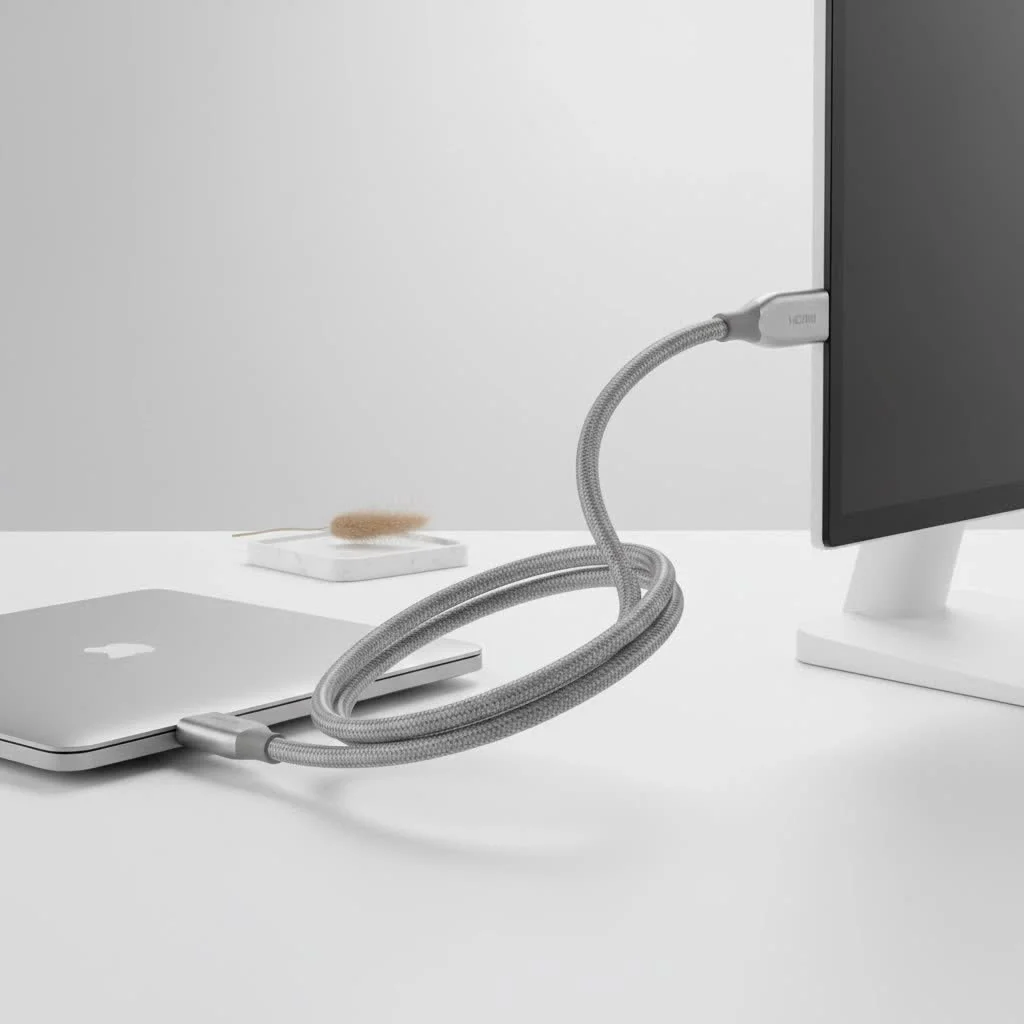
Choosing the right cable is more important than you think. It’s the digital bridge between your source (like a Blu-ray player or PS5) and your screen. A weak bridge can lead to signal dropouts, sparkling artifacts, or a complete failure to display the high-quality image you paid for. This guide will demystify the premium high speed HDMI cable, so you can make an informed decision and ensure your setup is perfect.
What Exactly is a Premium High Speed HDMI Cable?
First and foremost, “Premium High Speed” isn’t just a fancy adjective—it’s an official certification. This standard was introduced by the HDMI Licensing Administrator, Inc., the very creators of the HDMI specification. Its purpose is to give consumers confidence that a cable can reliably handle the demanding features of the HDMI 2.0b specification.
At its core, a certified premium high speed HDMI cable is guaranteed to support a bandwidth of 18Gbps (Gigabits per second). Think of bandwidth as a highway for data. The more lanes you have, the more data can travel at once without a traffic jam. This 18Gbps highway is essential for sending uncompressed 4K Ultra HD video at a smooth 60 frames per second (4K@60Hz) along with advanced color and audio formats.
Any cable can claim to be “high speed,” but only those that pass rigorous testing can bear the official “Premium Certified” label.
The Seal of Approval: Why Certification Matters
When you buy a cable with the Premium HDMI Cable Certification label, you’re not just buying a piece of wire; you’re buying peace of mind. To earn this label, cables must undergo stringent testing at an HDMI Authorized Test Center (ATC).
This testing process checks for several critical factors:
- Full 18Gbps Bandwidth: The cable is tested to ensure it doesn’t just claim to support 18Gbps, but that it actually delivers it consistently.
- Reduced Electromagnetic Interference (EMI): Modern homes are filled with wireless signals from Wi-Fi routers, smartphones, and other devices. Low-quality cables can be susceptible to this interference, causing glitches on your screen. Premium certified cables are tested for low EMI to ensure a clean, stable signal.
- Authenticity Verification: Every certified cable comes with a unique anti-counterfeit QR code on the packaging. You can use the official HDMI Cable Certification app on your phone to scan this label and instantly verify that you’re holding a genuine product, not a cheap knock-off.
“I’ve seen countless home theater setups where the client has a top-of-the-line TV and receiver, but they’re getting signal drops or weird visual artifacts,” says Johnathan Pierce, a certified AV technician with over 15 years of experience. “Nine times out of ten, the culprit is a non-certified, low-quality HDMI cable that simply can’t handle the 18Gbps data stream. The certification program takes the guesswork out of the equation.”
Key Features You Unlock with the Right Cable
Using a certified premium high speed HDMI cable ensures you get access to all the features your modern devices have to offer. It’s about more than just a picture on a screen; it’s about experiencing content the way creators intended.
Flawless 4K Ultra HD at 60Hz
|
Our Picks for the Best HDMI Cable in 2026
As an Amazon Associate I earn from qualifying purchases.
|
||
| Num | Product | Action |
|---|---|---|
| 1 | Anker HDMI Cable 8K@60Hz, 6FT Ultra HD 4K@120Hz HDMI Cord,48 Gbps Certified Ultra High-Speed,Compatible with PlayStation 5,Xbox,Samsung TVs,and More |

|
| 2 | Highwings 4K HDMI Cable 6.6FT/2m - High-Speed HDMI 2.0 Quality Cord 4K@60Hz, Braided Nylon & Gold Connectors, HDR, Ethernet, ARC, 3D, HDCP 2.2, Compatible for PS-5/4/3/ HDTV/Monitor/DVD/Streaming |
|
| 3 | Highwings Long HDMI Cable 20 FT, 10K 8K 4K Ultra HD High Speed 2.1 HDMI Cable 48Gbps Braided Cord-4K@120Hz 8K@60Hz, DTS:X, HDCP 2.2&2.3, Dynamic HDR 10 Compatible with Roku TV/PS5/HDTV/Blu-ray |
|
| 4 | Highwings 8K 10K 4K HDMI Cable 48Gbps 6.6FT/2M, Certified Ultra High Speed HDMI Cable Braided Cord-4K@120Hz 8K@60Hz, DTS:X, HDCP 2.2 & 2.3, HDR 10 Compatible with Roku TV/PS5/HDTV/Blu-ray |
|
| 5 | 10K 8K HDMI 2.1 Cable 2-Pack 6.6FT, Highwings Certified 48Gbps Ultra High Speed Slim HDMI Cord,Support 4K@120Hz 8K@60Hz, HDCP 2.2&2.3, Dynamic HDR,eARC,DTS:X, Compatible with Roku TV/HDTV/PS5/Blu-ray |
|
| 6 | 15 Pack of 10 Foot hdmi Cables |
|
| 7 | Highwings High Speed 8K 60Hz HDMI Cable 3.3FT/1M, 2.1 48Gbps HDMI Braided Cable-4K@120Hz 7680P,DTS:X,HDCP 2.2 & 2.3, HDR 10,eARC,Dynamic HDR,Compatible for Laptop, Monitor, Roku TV |
|
| 8 | Short HDMI Cable 1 FT 2-Pack, 8K HDMI 2.1 48Gbps Ultra High Speed Braided HDMI Cords, 1 Foot HDMI Cable for Camera, Field Monitor, External Recorder, Laptop, PC |
|
| 9 | Highwings 8K@60 HDMI Cable 10FT/3M, 48Gbps 2.1 High Speed HDMI Braided Nylon 4K120 144Hz RTX 3090 eARC HDR10 4:4:4 HDCP 2.2&2.3 Compatible for PS5, PS4, UHD TV and PC |
|
| 10 | Highwings Long HDMI Cable 15 FT, 4K 8K 10K HDMI 2.1 Cord Ultra High Speed [in-Wall CL3 Rated, 8K@60Hz 4K@120Hz Video 48Gbps], Fit, Durable, Flexible, eARC, HDCP, Compatible for Ethernet SoundBar |
|
This is the headline feature. A 4K resolution has four times the pixels of standard 1080p HD, resulting in a much sharper, more detailed image. Running this at 60Hz (60 frames per second) provides incredibly smooth motion, which is crucial for watching fast-paced sports and for responsive, fluid gameplay on consoles like the PlayStation 4 Pro and Xbox One X.
The Magic of High Dynamic Range (HDR)
HDR is arguably a more significant visual upgrade than the jump from 1080p to 4K. It dramatically expands the range of both contrast and color. With HDR, you’ll see brighter whites, deeper blacks, and a wider, more vibrant spectrum of colors in between. This leads to a more realistic and lifelike picture. Formats like HDR10, Dolby Vision, and HLG all rely on the robust connection a premium cable provides.
Rich, Immersive Audio (ARC/eARC)
Your HDMI cable doesn’t just carry video; it also handles audio. The Audio Return Channel (ARC) feature allows your TV to send audio “upstream” to your soundbar or A/V receiver through the same HDMI cable. This simplifies your setup by reducing the number of cables you need. Premium cables reliably support ARC and even the more advanced eARC (Enhanced Audio Return Channel), which is necessary for uncompressed audio formats like Dolby Atmos and DTS:X.
Premium High Speed vs. Ultra High Speed: What’s the Difference?
Just as you get comfortable with one standard, another one appears. The latest certification is “Ultra High Speed,” which corresponds to the HDMI 2.1 specification. So, which one do you need?
| Feature | Premium High Speed (HDMI 2.0b) | Ultra High Speed (HDMI 2.1) |
|---|---|---|
| Max Bandwidth | 18Gbps | 48Gbps |
| Max Resolution | 4K@60Hz | 8K@60Hz, 4K@120Hz |
| Key Features | 4K, HDR, ARC, BT.2020 | All of the above + eARC, VRR, ALLM |
| Best For | 4K TVs, Blu-ray players, PS4 Pro, Xbox One X, Apple TV 4K | PlayStation 5, Xbox Series X, high-end gaming PCs, 8K TVs |
Essentially, for the vast majority of 4K devices currently on the market, a premium high speed HDMI cable is all you need. You only need to step up to an Ultra High Speed cable if you have a device that specifically requires HDMI 2.1 features, like 4K gaming at 120 frames per second.
How to Choose the Right Premium High Speed HDMI Cable
Choosing the right cable doesn’t have to be complicated. Here’s a simple breakdown based on your setup.
For Your 4K TV and Streaming Devices
If you have a 4K TV and use streaming devices like an Apple TV 4K, Roku Ultra, or a 4K Ultra HD Blu-ray player, a certified premium cable is the perfect choice. It guarantees you’ll see the best possible picture quality, with full HDR support, from all your favorite movies and shows.
For Gaming Consoles (PS4 Pro, Xbox One X)
These consoles were designed to push 4K gaming at up to 60fps. Using a standard, uncertified cable can lead to “handshake” issues where the console and TV fail to connect properly, or visual glitches during intense gameplay. A premium certified cable ensures a rock-solid connection.
For Your PC Monitor
If you use a 4K monitor for content creation or gaming at 60Hz, this cable is an excellent choice. It will ensure perfect color accuracy and a stable signal from your graphics card to your display.
Frequently Asked Questions (FAQ)
Do I really need a premium high speed HDMI cable for my 1080p TV?
No, you do not. A standard High-Speed HDMI cable is more than sufficient for 1080p content. However, buying a premium cable can be a good way to “future-proof” your setup if you plan on upgrading your TV soon.
Are more expensive HDMI cables better?
Not necessarily. The price doesn’t determine the performance. What matters is the certification. A certified premium high speed HDMI cable that costs $10 will perform identically to one that costs $100, as both have passed the same rigorous tests. Don’t fall for marketing that promises “better picture quality” from gold plating or exotic materials; focus on the official certification label.
What happens if I use a standard cable for 4K HDR content?
You might get lucky and it works, but it’s a gamble. More likely, you’ll experience issues like a black screen (no signal), “sparkles” or digital noise in the picture, or the HDR feature failing to activate. The cable simply won’t have the bandwidth to handle the data.
How long can a premium high speed HDMI cable be before the signal degrades?
Generally, passive premium certified cables work reliably up to about 15-25 feet (5-8 meters). For longer runs, you will likely need an “active” optical HDMI cable, which uses fiber optics to transmit the signal over much greater distances without degradation.
Is this cable backward compatible?
Yes, absolutely. You can use a premium high speed HDMI cable to connect older, non-4K devices without any issues. The cable will simply operate at the highest specification supported by the connected devices.
The Final Connection
In the world of home entertainment, the humble cable is often overlooked, but it’s one of the most critical components in your setup. The premium high speed HDMI cable standard was created to eliminate confusion and guarantee performance. By looking for the official certification label, you ensure that you’re getting a product that can reliably deliver the stunning 4K HDR visuals and immersive audio that your modern equipment is capable of producing. Don’t let a bad cable be the weak link in your entertainment chain.
Get our weekly buyer guide
Practical specs, not advice. Unsubscribe anytime.
I was so confused about all the different HDMI cables out there, especially after getting my new PS5. This guide really helped me understand why a premium high speed cable is essential. I picked one up, and the difference in my gaming experience is night and day. No more lag or weird visual glitches, just smooth 4K graphics.
This cable is exactly what I needed for my new gaming console. I was getting some weird flickering with my old cable, and I thought it was my TV. Turns out, it was just a weak digital bridge! Swapped it out for a premium high speed one, and everything is crystal clear now. Definitely worth the price for true 4K clarity.
I got a premium high speed HDMI cable for my Blu-ray player, hoping to see a huge difference. While the picture is good, I honestly didn’t notice a massive improvement over my old high-speed cable. Maybe my setup isn’t sensitive enough, or I just had a decent cable to begin with. It works fine, but didn’t blow me away.
I’ve always just grabbed whatever HDMI cable was cheapest, but after reading about signal dropouts, I decided to upgrade for my new 4K TV. The picture quality is definitely sharper, and I haven’t had any of those annoying sparkling artifacts. It’s a solid investment for anyone serious about their home theater setup.