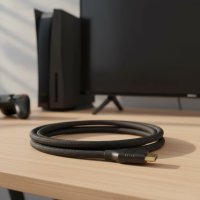
In the world of home entertainment, it’s the unsung hero connecting your favorite devices. We’re talking about the hdmi to hdmi cable, the digital pipeline that delivers stunning 4K visuals and immersive sound from your Blu-ray player, game console, or streaming box to your TV or projector. But let’s be honest, choosing the right one can feel like deciphering a secret code of version numbers, speed ratings, and acronyms. You’ve just invested in a brilliant new screen, and now you’re faced with a wall of cables, all promising the best performance.

Don’t worry, we’re here to cut through the noise. At Iecfl Tech, we believe everyone deserves to get the most out of their technology without needing an engineering degree. This guide will walk you through everything you need to know to select the perfect HDMI cable for your setup, ensuring you get the pristine picture and sound quality you paid for.
The Evolution: Understanding HDMI Versions
HDMI, or High-Definition Multimedia Interface, has evolved over the years, with each new version unlocking more capabilities. While the connector itself has remained the same, what’s inside has changed dramatically.
HDMI 1.4: The HD Standard
Introduced over a decade ago, HDMI 1.4 was the workhorse for the Full HD (1080p) era. It was one of the first versions to support 4K resolution, but only at a choppy 30 frames per second (30Hz). It also introduced the HDMI ARC (Audio Return Channel) feature. For older Blu-ray players or an Xbox 360, this cable is sufficient, but it’s outdated for modern 4K devices.
HDMI 2.0: The Gateway to 4K
This version was a game-changer, making 4K entertainment a reality for millions. HDMI 2.0 increased the bandwidth to 18 Gbps, allowing it to handle 4K resolution at a smooth 60Hz. It also ushered in support for High Dynamic Range (HDR), which provides more vibrant colors and better contrast. Most 4K TVs, streaming devices, and the PlayStation 4/Xbox One generation use this standard.
HDMI 2.1: The New Frontier
HDMI 2.1 is the latest and greatest standard, built for the next generation of entertainment. With a massive bandwidth jump to 48 Gbps, it can handle 4K at 120Hz and even 8K at 60Hz. This is the standard required for cutting-edge features on the PlayStation 5 and Xbox Series X, like Variable Refresh Rate (VRR) for smoother gaming and eARC (Enhanced Audio Return Channel) for uncompressed, high-fidelity sound.
Decoding Cable Types: It’s All About Speed
Forget about version numbers when you’re shopping. The HDMI organization has simplified things by categorizing cables based on their speed and capabilities.
- Standard HDMI Cable: The oldest type, designed for 720p and 1080i resolutions. These are largely obsolete and not recommended for purchase today.
- High-Speed HDMI Cable: This is the most common cable on the market. It’s certified to handle the 18 Gbps bandwidth required for HDMI 2.0 features, including 4K at 60Hz and HDR. For most 4K TVs and streaming setups, this is all you need.
- Premium High-Speed HDMI Cable: This is a High-Speed cable that has undergone more rigorous testing and certification. It guarantees reliable performance for 4K/60Hz with HDR, making it a solid choice for peace of mind.
- Ultra High-Speed HDMI Cable: This is the only cable that can officially support all the features of HDMI 2.1. It’s certified for 48 Gbps bandwidth, making it essential for 8K TVs and for gamers who want to experience 4K at a buttery-smooth 120Hz.
“I always tell my clients the same thing: match the cable to your most powerful device. If you have a PS5 and a compatible TV, an Ultra High-Speed cable is a must. Otherwise, you’re leaving performance on the table. For everyone else, a certified High-Speed cable is the reliable, cost-effective choice.”
— Jonathan Carter, Home Theater Installation Specialist
How to Choose the Right HDMI to HDMI Cable
Now, let’s put it all together. To find the right hdmi to hdmi cable, simply match the cable type to your specific needs.
For Your 4K TV and Streaming
|
Our Picks for the Best HDMI Cable in 2026
As an Amazon Associate I earn from qualifying purchases.
|
||
| Num | Product | Action |
|---|---|---|
| 1 | Highwings 8K@60 HDMI Cable 10FT/3M, 48Gbps 2.1 High Speed HDMI Braided Nylon 4K120 144Hz RTX 3090 eARC HDR10 4:4:4 HDCP 2.2&2.3 Compatible for PS5, PS4, UHD TV and PC |

|
| 2 | Highwings Long HDMI Cable 15 FT, 4K 8K 10K HDMI 2.1 Cord Ultra High Speed [in-Wall CL3 Rated, 8K@60Hz 4K@120Hz Video 48Gbps], Fit, Durable, Flexible, eARC, HDCP, Compatible for Ethernet SoundBar |
|
| 3 | Highwings 4K HDMI Cable 6.6FT/2m - High-Speed HDMI 2.0 Quality Cord 4K@60Hz, Braided Nylon & Gold Connectors, HDR, Ethernet, ARC, 3D, HDCP 2.2, Compatible for PS-5/4/3/ HDTV/Monitor/DVD/Streaming |
|
| 4 | Anker HDMI Cable 8K@60Hz, 6FT Ultra HD 4K@120Hz HDMI Cord,48 Gbps Certified Ultra High-Speed,Compatible with PlayStation 5,Xbox,Samsung TVs,and More |
|
| 5 | Highwings High Speed 8K 60Hz HDMI Cable 3.3FT/1M, 2.1 48Gbps HDMI Braided Cable-4K@120Hz 7680P,DTS:X,HDCP 2.2 & 2.3, HDR 10,eARC,Dynamic HDR,Compatible for Laptop, Monitor, Roku TV |
|
| 6 | Highwings 8K 10K 4K HDMI Cable 48Gbps 6.6FT/2M, Certified Ultra High Speed HDMI Cable Braided Cord-4K@120Hz 8K@60Hz, DTS:X, HDCP 2.2 & 2.3, HDR 10 Compatible with Roku TV/PS5/HDTV/Blu-ray |
|
| 7 | Highwings Long HDMI Cable 20 FT, 10K 8K 4K Ultra HD High Speed 2.1 HDMI Cable 48Gbps Braided Cord-4K@120Hz 8K@60Hz, DTS:X, HDCP 2.2&2.3, Dynamic HDR 10 Compatible with Roku TV/PS5/HDTV/Blu-ray |
|
| 8 | 10K 8K HDMI 2.1 Cable 2-Pack 6.6FT, Highwings Certified 48Gbps Ultra High Speed Slim HDMI Cord,Support 4K@120Hz 8K@60Hz, HDCP 2.2&2.3, Dynamic HDR,eARC,DTS:X, Compatible with Roku TV/HDTV/PS5/Blu-ray |
|
| 9 | Short HDMI Cable 1 FT 2-Pack, 8K HDMI 2.1 48Gbps Ultra High Speed Braided HDMI Cords, 1 Foot HDMI Cable for Camera, Field Monitor, External Recorder, Laptop, PC |
|
| 10 | 15 Pack of 10 Foot hdmi Cables |
|
If your setup consists of a 4K TV and devices like an Apple TV 4K, Roku, or a 4K Blu-ray player, you are in the HDMI 2.0 world.
- What you need: A High-Speed HDMI Cable (or a Premium High-Speed certified one).
- Why: These cables have the 18 Gbps bandwidth necessary to carry a 4K signal at 60 frames per second with HDR. You don’t need to overspend on an 8K cable if your devices don’t support it.
For Next-Gen Gaming (PS5, Xbox Series X)
If you own a PlayStation 5 or Xbox Series X and a TV with HDMI 2.1 ports (often labeled “4K @ 120Hz”), you need the best of the best.
- What you need: An Ultra High-Speed HDMI Cable.
- Why: This is the only way to unlock the full potential of your console, including 4K gaming at 120Hz for maximum smoothness, Auto Low Latency Mode (ALLM), and Variable Refresh Rate (VRR) to eliminate screen tearing.
For Future-Proofing and 8K TVs
If you’ve just invested in an 8K TV or simply want to ensure your setup is ready for whatever comes next, the choice is clear.
- What you need: An Ultra High-Speed HDMI Cable.
- Why: Even if you don’t have 8K sources yet, this cable ensures you’re prepared for the future. It’s fully backward compatible, so it will work perfectly with all your existing 4K and 1080p devices.
Common Myths and Questions
Navigating the world of HDMI can be tricky. Here are some quick answers to common questions.
Do I Need Expensive, Gold-Plated Cables?
No. For the digital signals that HDMI carries, a cable either works or it doesn’t. Expensive “premium” features like gold-plated connectors or fancy braiding offer no improvement in picture or sound quality over a properly certified, affordable cable. The certification (like “Ultra High-Speed”) is what matters, not the price tag.
What About Cable Length?
For most home setups, a cable that is 3 to 6 feet long is perfect. Signal quality can start to degrade on cheaper cables over longer distances (over 15 feet). If you need a long run, look for an “active” HDMI cable, which has built-in electronics to boost the signal.
What is ARC/eARC?
Audio Return Channel (ARC) allows a single HDMI cable to send audio from your TV back to a soundbar or AV receiver. This simplifies your setup by reducing cable clutter. The newer eARC (Enhanced ARC), a feature of HDMI 2.1, has much higher bandwidth, allowing it to carry uncompressed audio formats like Dolby Atmos. You’ll need an eARC-compatible TV, soundbar, and a High-Speed (with Ethernet) or Ultra High-Speed cable to use it.
Frequently Asked Questions (FAQ)
Q: Is there a difference between a 4K HDMI cable and a regular one?
A: Yes. A 4K HDMI cable is rated as “High-Speed” or higher, guaranteeing it can handle the bandwidth needed for 4K resolutions, especially with HDR. A “Standard” HDMI cable cannot.
Q: Can I use an older HDMI cable for a 4K TV?
A: You can, but it might not work reliably. If the cable isn’t a certified High-Speed cable, you may experience signal dropouts, a blank screen (sparkles), or be unable to enable HDR.
Q: Do I need to buy a new hdmi to hdmi cable when I get a new device?
A: Not necessarily. If your current cable is a High-Speed cable and you are connecting a 4K/60Hz device, it should work perfectly. You only need to upgrade to an Ultra High-Speed cable if you buy a device with HDMI 2.1 features, like a PS5 or an 8K TV.
Q: How do I know if my cable is Ultra High-Speed?
A: Look for the official Ultra High-Speed certification label on the packaging. This includes a QR code you can scan with the HDMI Cable Certification app to verify its authenticity.
Q: Are all HDMI ports on a TV the same?
A: Not always. On many TVs, only one or two ports might support the full features of HDMI 2.1 (like 4K @ 120Hz). Check the labels on the ports or consult your TV’s manual to find the most capable one.
The Final Connection
Choosing the right hdmi to hdmi cable doesn’t have to be complicated. By ignoring the confusing version numbers and focusing on the official speed certifications, you can make a smart choice every time. For the vast majority of users with 4K TVs, a certified High-Speed cable is the perfect blend of performance and value. For elite gamers and those on the cutting edge with 8K displays, the Ultra High-Speed cable is the only way to go. By investing in the right cable, you ensure that every pixel and sound wave travels perfectly from your source to your screen.
Get our weekly buyer guide
Practical specs, not advice. Unsubscribe anytime.