Have you ever found yourself staring at an old VCR or a cable box with only a round, screw-on coaxial output, then looking at your new, slim TV that only has flat HDMI ports? It’s a classic tech dilemma. You’re trying to bridge two different eras of technology, and a simple wire won’t do the trick. If you’re wondering how to make a Coaxial Cable To Hdmi connection work, you’ve come to the right place. It’s not just possible; it’s surprisingly straightforward once you have the right tool for the job.
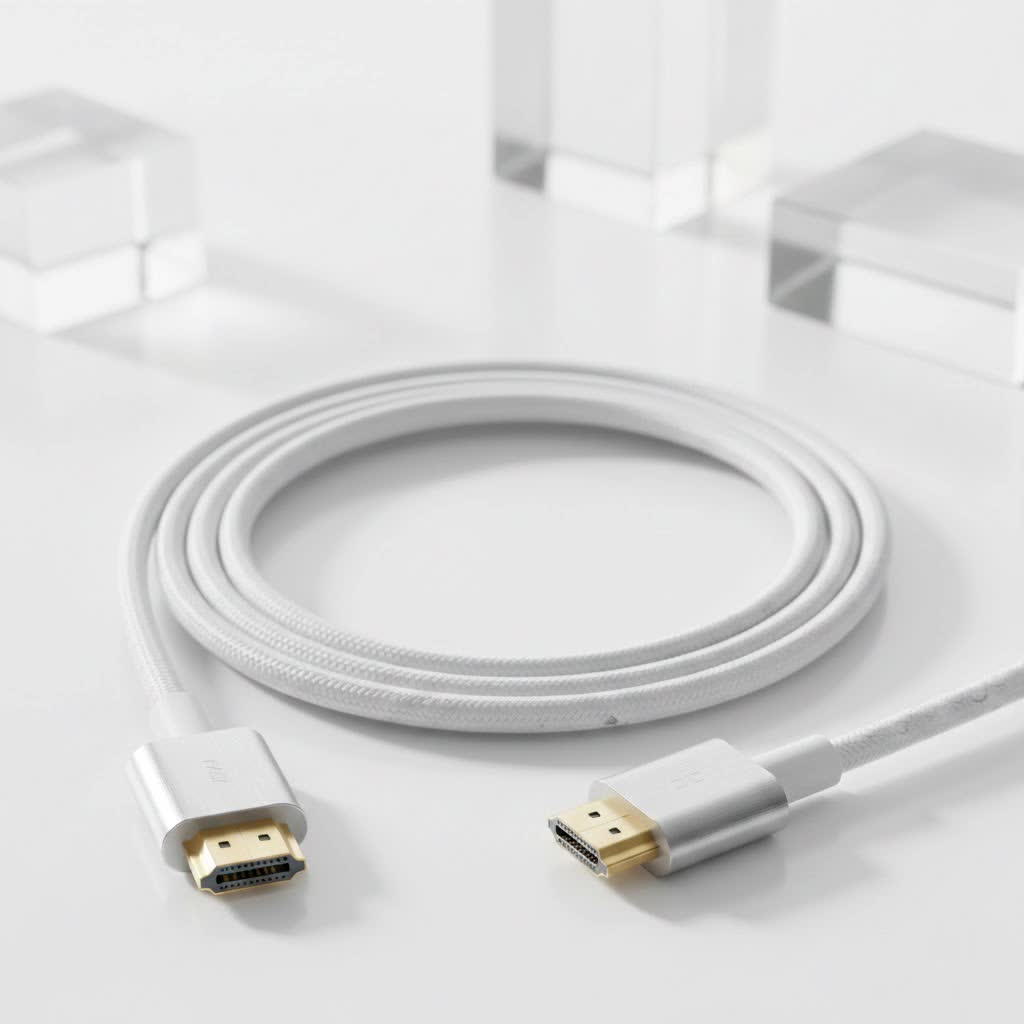
This guide will walk you through everything you need to know, from the technology behind the problem to the step-by-step process of getting your vintage gear playing nicely with your modern displays.
Why Can’t You Just Use a Simple Cable?
First, let’s tackle the core issue. Why isn’t there a simple cable with a coaxial connector on one end and an HDMI connector on the other? The answer lies in the type of signal each cable is designed to carry.
- Coaxial Cable (RF Signal): This cable carries an analog radio frequency (RF) signal. Think of it as an old-school radio broadcast, carrying video and audio information bundled together in a format that older televisions were built to understand and decode.
- HDMI Cable (Digital Signal): HDMI stands for High-Definition Multimedia Interface. As the name suggests, it carries a pure digital signal. This signal is made of ones and zeros, delivering pristine, uncompressed audio and video data directly to your screen.
An analog signal and a digital signal are fundamentally different. Trying to connect them directly is like trying to play a vinyl record on a Blu-ray player. The hardware just doesn’t speak the same language. This is where a converter comes in.
The Solution: The RF to HDMI Converter
To successfully connect a coaxial source to an HDMI display, you need a device called an RF to HDMI Converter or an RF Modulator. This small, powered box acts as a translator, performing a critical job:
It takes the incoming analog RF signal from the coaxial cable, decodes it, and then re-encodes it into the digital format that your TV can understand and display via its HDMI port.
“People often underestimate the complexity of this conversion,” notes home theater specialist Michael Carter. “They look for a cheap, passive cable, but that’s a dead end. An active, powered converter is essential because it’s not just adapting a plug shape; it’s performing a complex digital transformation of the entire signal. A powered unit ensures a stable, consistent picture without flicker or dropouts.”
How to Choose the Right Coaxial Cable to HDMI Converter
When shopping for a converter, you’ll notice they look similar, but a few key features can make a difference. Here’s what to look for:
- Resolution Support: Most converters will output at either 720p or 1080p. Since the source signal is standard definition, a 720p converter is usually sufficient. However, getting a 1080p model offers a bit more future-proofing and may provide slightly better upscaling.
- Included Cables: Check if the converter comes with an HDMI cable and a power adapter. Some budget models might require you to purchase these separately.
- Power Source: All of these converters require power to perform the signal translation. They will almost always come with a small AC power adapter that needs to be plugged into a wall outlet.
- Build Quality and Brand Reputation: Look at user reviews to gauge the reliability and longevity of the device. Well-known electronics brands often offer better support and a more reliable product.
|
Our Picks for the Best HDMI Cable in 2026
As an Amazon Associate I earn from qualifying purchases.
|
||
| Num | Product | Action |
|---|---|---|
| 1 | Short HDMI Cable 1 FT 2-Pack, 8K HDMI 2.1 48Gbps Ultra High Speed Braided HDMI Cords, 1 Foot HDMI Cable for Camera, Field Monitor, External Recorder, Laptop, PC |

|
| 2 | 15 Pack of 10 Foot hdmi Cables |
|
| 3 | Highwings 8K 10K 4K HDMI Cable 48Gbps 6.6FT/2M, Certified Ultra High Speed HDMI Cable Braided Cord-4K@120Hz 8K@60Hz, DTS:X, HDCP 2.2 & 2.3, HDR 10 Compatible with Roku TV/PS5/HDTV/Blu-ray |
|
| 4 | 10K 8K HDMI 2.1 Cable 2-Pack 6.6FT, Highwings Certified 48Gbps Ultra High Speed Slim HDMI Cord,Support 4K@120Hz 8K@60Hz, HDCP 2.2&2.3, Dynamic HDR,eARC,DTS:X, Compatible with Roku TV/HDTV/PS5/Blu-ray |
|
| 5 | Highwings 8K@60 HDMI Cable 10FT/3M, 48Gbps 2.1 High Speed HDMI Braided Nylon 4K120 144Hz RTX 3090 eARC HDR10 4:4:4 HDCP 2.2&2.3 Compatible for PS5, PS4, UHD TV and PC |
|
| 6 | Highwings Long HDMI Cable 20 FT, 10K 8K 4K Ultra HD High Speed 2.1 HDMI Cable 48Gbps Braided Cord-4K@120Hz 8K@60Hz, DTS:X, HDCP 2.2&2.3, Dynamic HDR 10 Compatible with Roku TV/PS5/HDTV/Blu-ray |
|
| 7 | Highwings High Speed 8K 60Hz HDMI Cable 3.3FT/1M, 2.1 48Gbps HDMI Braided Cable-4K@120Hz 7680P,DTS:X,HDCP 2.2 & 2.3, HDR 10,eARC,Dynamic HDR,Compatible for Laptop, Monitor, Roku TV |
|
| 8 | Highwings 4K HDMI Cable 6.6FT/2m - High-Speed HDMI 2.0 Quality Cord 4K@60Hz, Braided Nylon & Gold Connectors, HDR, Ethernet, ARC, 3D, HDCP 2.2, Compatible for PS-5/4/3/ HDTV/Monitor/DVD/Streaming |
|
| 9 | Highwings Long HDMI Cable 15 FT, 4K 8K 10K HDMI 2.1 Cord Ultra High Speed [in-Wall CL3 Rated, 8K@60Hz 4K@120Hz Video 48Gbps], Fit, Durable, Flexible, eARC, HDCP, Compatible for Ethernet SoundBar |
|
| 10 | Anker HDMI Cable 8K@60Hz, 6FT Ultra HD 4K@120Hz HDMI Cord,48 Gbps Certified Ultra High-Speed,Compatible with PlayStation 5,Xbox,Samsung TVs,and More |
|
A Step-by-Step Guide to Connecting Your Devices
Once you have your RF to HDMI converter, the setup process is simple. Follow these steps to get your older device working on your new TV.
- Disconnect Your Source: If your coaxial source (like a VCR or old cable box) is plugged into anything, disconnect it.
- Connect Coaxial to Converter: Take the coaxial cable coming from your source device and screw it into the port labeled “RF In,” “Coaxial In,” or “Antenna In” on the converter box.
- Connect HDMI to TV: Plug one end of an HDMI cable into the “HDMI Out” port on the converter. Plug the other end into an available HDMI port on your television. Make a note of which port you use (e.g., HDMI 1, HDMI 2).
- Power Up the Converter: Plug the converter’s power adapter into the device and then into a wall outlet or power strip.
- Turn Everything On: Power on your source device (VCR, etc.) and your television.
- Select the Correct Input: Using your TV remote, switch the input source to the HDMI port you connected the converter to in Step 3.
- Enjoy Your Content: Your analog device’s signal should now be appearing on your modern TV screen. If you’re using a VCR, pop in a tape to test it out!
Common Problems and How to Troubleshoot Them
Sometimes, things don’t work perfectly on the first try. If you’re not getting a picture or the quality is poor, here are a few common issues and their solutions.
No Signal on the TV
- Check Your Inputs: The most common mistake is being on the wrong TV input. Double-check that you’ve selected the correct HDMI port (e.g., HDMI 1, HDMI 2).
- Confirm Power: Ensure the converter is plugged in and that its power indicator light is on.
- Secure Connections: Make sure both the coaxial and HDMI cables are screwed in or plugged in firmly at both ends—on the source, the converter, and the TV.
Poor Picture Quality
It’s crucial to set realistic expectations. A coaxial cable to HDMI converter cannot improve the original signal’s quality. It can only translate it. The video from a VCR or an old game console will still look like a standard-definition source.
- Check the Source: The quality is limited by your source device. If the VCR heads are dirty or the tape is worn out, the picture will be poor.
- Adjust TV Settings: Your TV’s aspect ratio might need adjustment. Use your TV remote to cycle through settings like “4:3,” “16:9,” “Zoom,” or “Fit to Screen” to find the best look.
Frequently Asked Questions (FAQ)
Will a coaxial to HDMI converter work for modern cable or satellite boxes?
No. Modern cable and satellite boxes already use HDMI for high-definition output. This conversion process is specifically for older devices that only have a coaxial RF output.
Can I connect an OTA (Over-the-Air) antenna to my HDMI-only TV with this?
Yes, absolutely. This is a very popular use case. If you have a TV without a built-in coaxial F-type connector, you can plug your antenna into the RF converter, which then connects to your TV’s HDMI port, effectively working as an external TV tuner.
Does the length of the coaxial or HDMI cable matter?
For typical in-home setups, cable length is not a major concern. However, for best results, try to keep both the coaxial and HDMI cables under 50 feet to avoid potential signal degradation.
Is there any audio delay or lag when using a converter?
For watching videos, any delay is usually imperceptible. For vintage gaming, most standard converters introduce a minimal amount of lag that won’t be noticeable to casual players. Hardcore retro gamers may prefer other solutions, but for most users, it’s not an issue.
Can I go the other way, from HDMI to Coaxial?
Yes, but it requires a different device: an HDMI to RF modulator. This is used in situations where you want to send a modern signal (like from a Blu-ray player) to an very old television that only has a coaxial input.
The Final Word
Connecting older technology to new displays doesn’t have to be a source of frustration. While you can’t use a simple wire, the solution is both effective and affordable. By using the correct RF to HDMI converter, you can breathe new life into your classic VCRs, DVD players, and retro gaming consoles, ensuring they have a place in your modern home entertainment setup. The right coaxial cable to HDMI converter acts as the perfect bridge between yesterday’s tech and today’s screens.
