In today’s fast-paced digital world, connecting your devices seamlessly is more important than ever. Whether you’re a professional needing to present from a laptop, a gamer seeking an immersive experience, or just someone wanting to stream movies from your phone to a big screen, the Cable Type C To Hdmi has become an essential tool. This single cable bridges the gap between modern, compact devices and the vast world of high-definition displays. But with so many options and technical terms, how do you choose the right one?
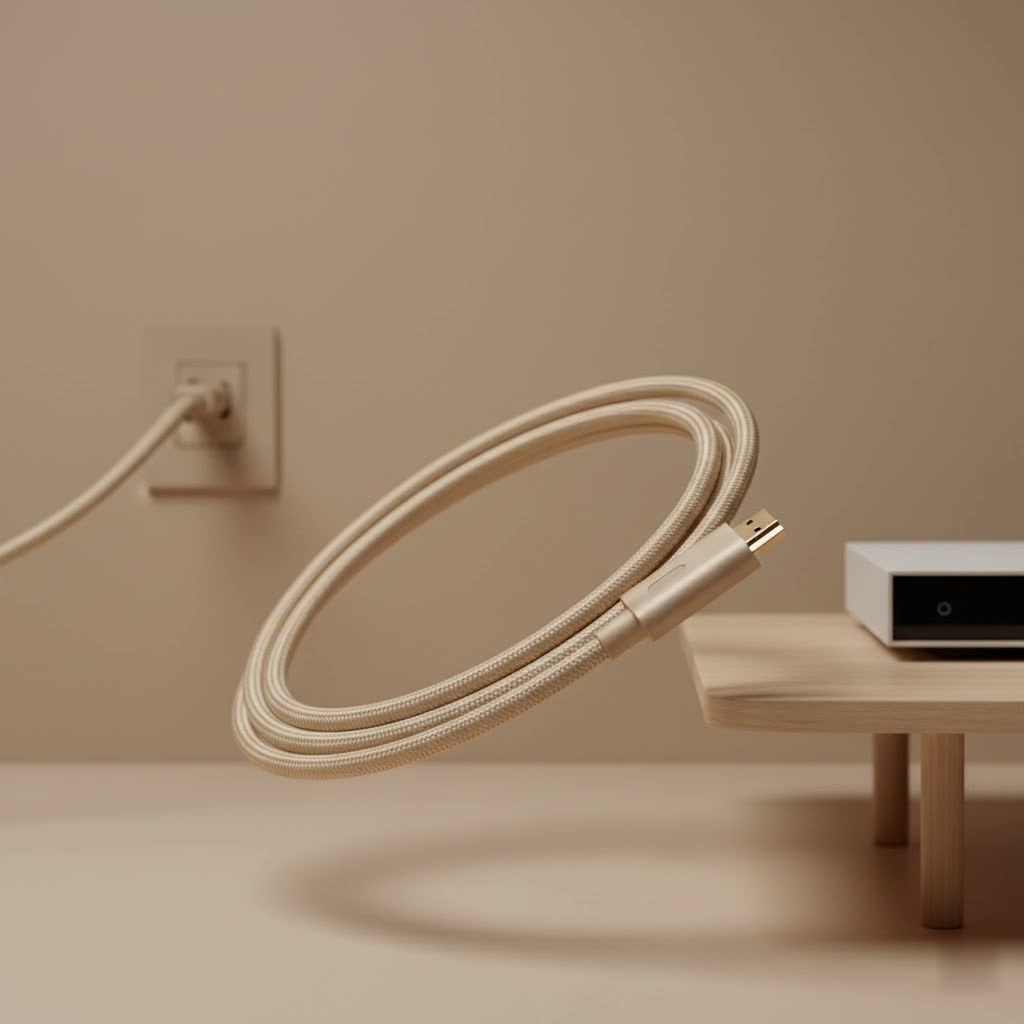
Welcome to Iecfl Tech, your definitive source for all things HDMI. We’re here to demystify the technology, cut through the jargon, and help you find the perfect cable for your needs. This guide will walk you through everything you need to know about USB-C to HDMI cables, ensuring your next purchase is an informed one.
What Exactly Is a USB-C to HDMI Cable?
At its core, a USB-C to HDMI cable is a bridge that transmits digital audio and video signals from a device with a USB-C port (like a laptop, tablet, or smartphone) to a display with an HDMI port (like a TV, monitor, or projector). It’s a plug-and-play solution that simplifies what used to require multiple adapters or complex setups.
The magic behind this connection lies in a feature called DisplayPort Alternate Mode (DP Alt Mode). For a USB-C port to output a video signal, it must support this specific protocol.
“A common point of confusion for consumers is assuming every USB-C port can handle video,” notes Alex Robinson, a home theater installation expert with over 15 years of experience. “It’s crucial to check your device’s specifications for ‘DP Alt Mode’ or Thunderbolt 3/4 support. A simple charging USB-C port won’t work with a video cable.”
How to Check if Your Device Supports Video Output Over USB-C
|
Our Picks for the Best HDMI Cable in 2026
As an Amazon Associate I earn from qualifying purchases.
|
||
| Num | Product | Action |
|---|---|---|
| 1 | Highwings 4K HDMI Cable 6.6FT/2m - High-Speed HDMI 2.0 Quality Cord 4K@60Hz, Braided Nylon & Gold Connectors, HDR, Ethernet, ARC, 3D, HDCP 2.2, Compatible for PS-5/4/3/ HDTV/Monitor/DVD/Streaming |

|
| 2 | Short HDMI Cable 1 FT 2-Pack, 8K HDMI 2.1 48Gbps Ultra High Speed Braided HDMI Cords, 1 Foot HDMI Cable for Camera, Field Monitor, External Recorder, Laptop, PC |
|
| 3 | Highwings Long HDMI Cable 15 FT, 4K 8K 10K HDMI 2.1 Cord Ultra High Speed [in-Wall CL3 Rated, 8K@60Hz 4K@120Hz Video 48Gbps], Fit, Durable, Flexible, eARC, HDCP, Compatible for Ethernet SoundBar |
|
| 4 | Highwings 8K@60 HDMI Cable 10FT/3M, 48Gbps 2.1 High Speed HDMI Braided Nylon 4K120 144Hz RTX 3090 eARC HDR10 4:4:4 HDCP 2.2&2.3 Compatible for PS5, PS4, UHD TV and PC |
|
| 5 | 10K 8K HDMI 2.1 Cable 2-Pack 6.6FT, Highwings Certified 48Gbps Ultra High Speed Slim HDMI Cord,Support 4K@120Hz 8K@60Hz, HDCP 2.2&2.3, Dynamic HDR,eARC,DTS:X, Compatible with Roku TV/HDTV/PS5/Blu-ray |
|
| 6 | Anker HDMI Cable 8K@60Hz, 6FT Ultra HD 4K@120Hz HDMI Cord,48 Gbps Certified Ultra High-Speed,Compatible with PlayStation 5,Xbox,Samsung TVs,and More |
|
| 7 | Highwings High Speed 8K 60Hz HDMI Cable 3.3FT/1M, 2.1 48Gbps HDMI Braided Cable-4K@120Hz 7680P,DTS:X,HDCP 2.2 & 2.3, HDR 10,eARC,Dynamic HDR,Compatible for Laptop, Monitor, Roku TV |
|
| 8 | Highwings Long HDMI Cable 20 FT, 10K 8K 4K Ultra HD High Speed 2.1 HDMI Cable 48Gbps Braided Cord-4K@120Hz 8K@60Hz, DTS:X, HDCP 2.2&2.3, Dynamic HDR 10 Compatible with Roku TV/PS5/HDTV/Blu-ray |
|
| 9 | Highwings 8K 10K 4K HDMI Cable 48Gbps 6.6FT/2M, Certified Ultra High Speed HDMI Cable Braided Cord-4K@120Hz 8K@60Hz, DTS:X, HDCP 2.2 & 2.3, HDR 10 Compatible with Roku TV/PS5/HDTV/Blu-ray |
|
| 10 | 15 Pack of 10 Foot hdmi Cables |
|
Before you buy a cable, verifying your device’s compatibility is the most important step. Here’s how:
- Look for a Symbol: Check the port itself. Many manufacturers place a small DisplayPort logo (a ‘D’ shape with a ‘P’ inside) or a Thunderbolt logo (a lightning bolt) next to the USB-C port to indicate video capability.
- Consult the Manual: Your device’s user manual or technical specifications sheet is the most reliable source. Look for terms like “DisplayPort over USB-C,” “DP Alt Mode,” or “Thunderbolt 3 / 4.”
- Search the Manufacturer’s Website: Visit the support page for your specific model on the manufacturer’s website. The full specifications should be listed there.
Choosing the Right Cable Type C to HDMI
Not all cables are created equal. The right choice depends entirely on your setup and what you want to achieve. Let’s break down the key features to look for.
Resolution and Refresh Rate
This is perhaps the most critical specification. It determines the clarity and smoothness of your picture.
- 4K at 30Hz: This is the baseline for most budget cables. It’s fine for watching movies or for presentations, but the lower refresh rate will result in a choppy experience for gaming or fast-paced video.
- 4K at 60Hz: This is the sweet spot for most users. It provides a crisp 4K picture with a smooth 60 frames per second, making it ideal for modern TVs, monitors, and general use, including casual gaming.
- 8K at 60Hz or 4K at 120Hz: Found in higher-end cables (often labeled HDMI 2.1), these are for enthusiasts, competitive gamers, and professionals who need the absolute best performance. Your source device and display must also support these high specs.
HDR (High Dynamic Range)
HDR significantly improves picture quality by offering a wider range of colors and better contrast—brighter whites and deeper blacks. If you have an HDR-compatible TV or monitor and plan to watch HDR content from services like Netflix or Disney+, make sure your cable type C to HDMI explicitly supports HDR10 or Dolby Vision.
Build Quality and Length
While often overlooked, the physical construction of the cable matters for longevity and signal integrity.
- Connectors: Gold-plated connectors are a good sign as they resist corrosion and provide a more reliable connection.
- Cabling: A braided nylon jacket offers superior durability and prevents tangling compared to a standard plastic or rubber coating.
- Length: Choose a length that comfortably reaches from your device to your display without being too taut or having excessive slack. Longer cables (over 10 feet or 3 meters) can sometimes suffer from signal degradation, so opt for a well-shielded, high-quality cable if you need a long run.
Common Use Cases for USB-C to HDMI Cables
Understanding how you’ll use the cable can help narrow down your options.
For the Professional: Laptops and Presentations
If you’re connecting a MacBook Pro, Dell XPS, or another modern laptop to a monitor or projector, a reliable 4K@60Hz cable is your best bet. It provides a sharp, fluid image for extending your desktop or mirroring your screen during a presentation. Look for a sturdy, travel-friendly design.
For the Gamer: High Refresh Rate Gaming
When connecting a gaming laptop or a compatible device to a gaming monitor, every frame counts. A cable type C to HDMI that supports at least 4K@120Hz or 1440p@144Hz is essential to take full advantage of your hardware’s capabilities and ensure a lag-free, ultra-smooth gaming experience.
For the Movie Lover: Streaming to the Big Screen
Connecting your tablet or smartphone (like a Samsung Galaxy with DeX support) to your 4K TV turns it into a powerful media center. A cable that supports 4K@60Hz and HDR will ensure you get the best possible picture quality, bringing your favorite movies and shows to life.
Troubleshooting Common Problems
Even with the right cable, you might run into issues. Here are some quick fixes for common problems.
No Signal or Flickering Screen
- Check Compatibility: First and foremost, re-verify that your device’s USB-C port supports DP Alt Mode.
- Secure the Connection: Unplug and firmly re-plug both ends of the cable. A loose connection is a frequent culprit.
- Try a Different Port: If your display has multiple HDMI ports, try a different one. Similarly, if your laptop has multiple USB-C ports, ensure you’re using the one designated for video output.
- Update Drivers: Make sure your computer’s graphics drivers and system software are up to date.
Incorrect Resolution or Refresh Rate
If your display isn’t showing the correct resolution, go into your device’s display settings. You should be able to manually select the desired resolution (e.g., 3840 x 2160 for 4K) and refresh rate (e.g., 60Hz).
Frequently Asked Questions (FAQ)
Q: Will a USB-C to HDMI cable charge my device?
A: No, a standard USB-C to HDMI cable is designed for one-way audio/video transmission and does not carry power back to the source device. For charging capabilities, you would need a USB-C multiport hub or dock that has an HDMI port and a USB-C Power Delivery (PD) port.
Q: What is the difference between a cable and an adapter?
A: A cable is a single, integrated unit with a USB-C connector on one end and an HDMI connector on the other. An adapter is a small dongle with a female HDMI port, which requires a separate HDMI cable to connect to your display. Cables are simpler and more convenient, while adapters can be more versatile if you already own HDMI cables of various lengths.
Q: Do I need to install any software or drivers?
A: In almost all cases, no. USB-C to HDMI cables are designed to be plug-and-play. Your device’s operating system should automatically detect the external display as long as the hardware is compatible.
Q: Can I connect my iPhone 15 to a TV with this cable?
A: Yes! The iPhone 15 series features a USB-C port that supports DisplayPort Alternate Mode, so you can use a cable type C to HDMI to mirror your iPhone’s screen directly to a TV or monitor.
Q: Is there a difference between a Thunderbolt 3 and a standard USB-C to HDMI cable?
A: While a Thunderbolt 3/4 port is a type of USB-C port, it offers much higher bandwidth. Any standard USB-C to HDMI cable will work with a Thunderbolt port. The key is that the port itself supports video output, which all Thunderbolt ports do.
Your Connection to a Better Picture
Choosing the right cable type C to HDMI doesn’t have to be complicated. By verifying your device’s compatibility and matching the cable’s specifications to your needs—whether it’s for 4K streaming, professional presentations, or high-refresh-rate gaming—you can unlock a world of high-definition content with a single, simple connection. Investing in a quality cable not only ensures a better picture but also provides a reliable link between your technology for years to come.
