So, you’re setting up your dream home theater, designing the ultimate gaming station, or maybe just trying to connect a projector across the room. You’ve got your shiny new 4K TV or high-refresh-rate monitor, but there’s a problem: the source device is just too far away. The standard six-foot cable that came in the box won’t even come close. This is where the 20 Foot Hdmi Cable comes into play, a simple solution to a common distance problem. But hold on—buying a longer HDMI cable isn’t as simple as just picking the first one you see.
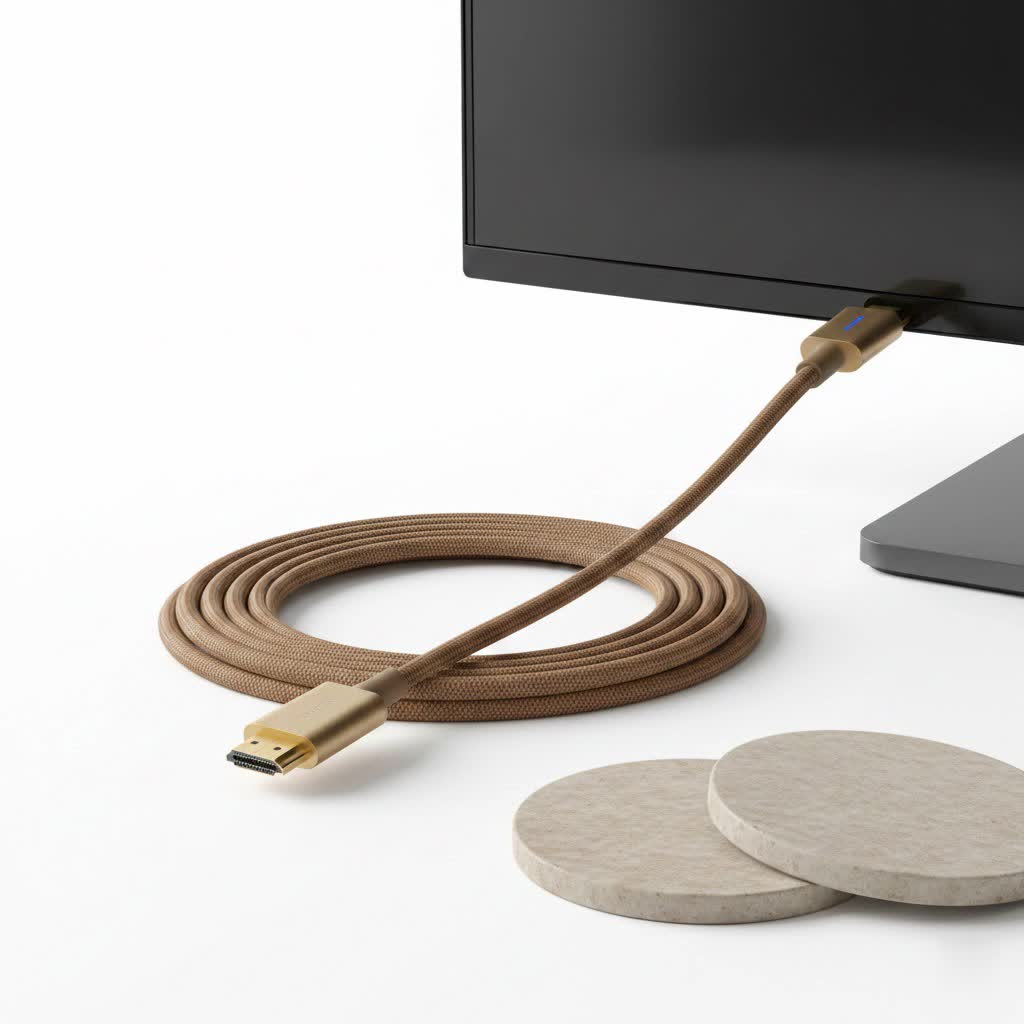
At this length, things get a bit more technical. Signal quality, bandwidth, and build construction become critically important. A poor-quality long cable can lead to a frustrating experience, from annoying video dropouts to a complete loss of signal. This guide will walk you through everything you need to know to choose the perfect 20 foot HDMI cable that delivers a flawless picture and sound every single time.
Why Length Matters: The Challenge of Long HDMI Cables
When you’re dealing with digital signals, distance is the enemy. As an HDMI signal travels down a copper wire, it gradually loses strength and becomes more susceptible to interference. This is a phenomenon known as signal attenuation. Over a short distance, like three or six feet, this loss is negligible. However, once you stretch that to 20 feet, signal integrity can become a real concern.
A weak or degraded signal can manifest in several ways:
- “Sparkles” or digital noise: You might see tiny, flickering white or colored pixels on the screen.
- HDCP handshake issues: The copy protection protocol (HDCP) might fail, resulting in a black screen or an error message.
- No signal at all: The display might not detect the source device whatsoever.
- Inability to support advanced features: The cable might not have enough bandwidth to handle features like 4K at 60Hz, HDR, or high refresh rates.
“Think of it like trying to have a conversation from across a crowded, noisy room,” explains Johnathan Miles, a professional home theater installer with over 15 years of experience. “Over a short distance, your voice is clear. But from 20 feet away, you have to speak up and enunciate, and even then, noise can interfere. A well-made long HDMI cable is like having a perfectly engineered megaphone—it ensures the message arrives loud and clear.”
Key Features for a Flawless 20 Foot HDMI Cable
To combat signal loss and ensure you get the performance you paid for, you need to pay close attention to the specifications and build quality of the cable.
HDMI Version and Bandwidth Certification
Forget about just looking for “HDMI 2.0” or “HDMI 2.1” on the box. The official licensing body now certifies cables based on their bandwidth capabilities. This is what truly matters.
- High-Speed (10.2 Gbps): This is the absolute minimum you should consider. It’s officially rated for 1080p and can often handle 4K at 30Hz, but it might struggle with 4K at 60Hz over 20 feet.
- Premium High-Speed (18 Gbps): This is the sweet spot for most modern setups. A certified Premium High-Speed 20 foot HDMI cable is guaranteed to support 4K at 60Hz, HDR, and wide color gamut. Look for the official certification sticker on the packaging.
- Ultra High-Speed (48 Gbps): This is the latest and greatest, designed for HDMI 2.1 features. If you’re a gamer with a PlayStation 5 or Xbox Series X, or you have an 8K TV, this is the cable you need. It supports 4K at 120Hz and 8K at 60Hz.
|
Our Picks for the Best HDMI Cable in 2026
As an Amazon Associate I earn from qualifying purchases.
|
||
| Num | Product | Action |
|---|---|---|
| 1 | Anker HDMI Cable 8K@60Hz, 6FT Ultra HD 4K@120Hz HDMI Cord,48 Gbps Certified Ultra High-Speed,Compatible with PlayStation 5,Xbox,Samsung TVs,and More |

|
| 2 | Highwings High Speed 8K 60Hz HDMI Cable 3.3FT/1M, 2.1 48Gbps HDMI Braided Cable-4K@120Hz 7680P,DTS:X,HDCP 2.2 & 2.3, HDR 10,eARC,Dynamic HDR,Compatible for Laptop, Monitor, Roku TV |
|
| 3 | Highwings Long HDMI Cable 15 FT, 4K 8K 10K HDMI 2.1 Cord Ultra High Speed [in-Wall CL3 Rated, 8K@60Hz 4K@120Hz Video 48Gbps], Fit, Durable, Flexible, eARC, HDCP, Compatible for Ethernet SoundBar |
|
| 4 | Highwings Long HDMI Cable 20 FT, 10K 8K 4K Ultra HD High Speed 2.1 HDMI Cable 48Gbps Braided Cord-4K@120Hz 8K@60Hz, DTS:X, HDCP 2.2&2.3, Dynamic HDR 10 Compatible with Roku TV/PS5/HDTV/Blu-ray |
|
| 5 | Highwings 4K HDMI Cable 6.6FT/2m - High-Speed HDMI 2.0 Quality Cord 4K@60Hz, Braided Nylon & Gold Connectors, HDR, Ethernet, ARC, 3D, HDCP 2.2, Compatible for PS-5/4/3/ HDTV/Monitor/DVD/Streaming |
|
| 6 | Short HDMI Cable 1 FT 2-Pack, 8K HDMI 2.1 48Gbps Ultra High Speed Braided HDMI Cords, 1 Foot HDMI Cable for Camera, Field Monitor, External Recorder, Laptop, PC |
|
| 7 | 10K 8K HDMI 2.1 Cable 2-Pack 6.6FT, Highwings Certified 48Gbps Ultra High Speed Slim HDMI Cord,Support 4K@120Hz 8K@60Hz, HDCP 2.2&2.3, Dynamic HDR,eARC,DTS:X, Compatible with Roku TV/HDTV/PS5/Blu-ray |
|
| 8 | 15 Pack of 10 Foot hdmi Cables |
|
| 9 | Highwings 8K 10K 4K HDMI Cable 48Gbps 6.6FT/2M, Certified Ultra High Speed HDMI Cable Braided Cord-4K@120Hz 8K@60Hz, DTS:X, HDCP 2.2 & 2.3, HDR 10 Compatible with Roku TV/PS5/HDTV/Blu-ray |
|
| 10 | Highwings 8K@60 HDMI Cable 10FT/3M, 48Gbps 2.1 High Speed HDMI Braided Nylon 4K120 144Hz RTX 3090 eARC HDR10 4:4:4 HDCP 2.2&2.3 Compatible for PS5, PS4, UHD TV and PC |
|
Passive vs. Active Cables: What’s the Difference?
When you’re shopping for a 20 foot HDMI cable, you’ll encounter two main types: passive and active.
- Passive Cables: These are standard copper cables with no extra electronics. Their performance depends entirely on the quality of the copper wire, shielding, and connectors. A well-made passive cable can work perfectly at 20 feet, but cheaper ones are a gamble.
- Active (or “Booster”) Cables: These cables have a small chipset built into one of the connectors that actively boosts the signal strength. This allows them to maintain signal integrity over longer distances. They are directional, meaning one end is labeled “Source” and the other “Display,” so you must plug them in correctly.
- Active Optical Cables (AOC): For the absolute best performance over long distances, fiber optic HDMI cables are the solution. They convert the electrical signal to light, send it down a fiber optic line, and convert it back at the other end. They are immune to electromagnetic interference and can carry 48 Gbps signals over much longer distances than copper, but they come at a premium price.
For a 20-foot run carrying a 4K HDR signal, a high-quality passive cable or a standard active cable is usually sufficient and offers the best value.
Shielding and Build Quality
Good shielding is non-negotiable for a long cable. It protects the delicate digital signal from electromagnetic interference (EMI) caused by power cords, Wi-Fi routers, and other nearby electronics. Look for cables that specify “triple-shielded” or have a braided jacket, as this often indicates more robust construction. Thicker wire, measured by a lower AWG (American Wire Gauge) number like 24AWG or 26AWG, is also better for carrying a strong signal over distance.
Choosing the Right Cable for Your Setup
Not everyone needs the most expensive, highest-bandwidth cable. Here’s how to pick the right 20 foot HDMI cable for your specific needs.
For 4K TVs and Home Theaters
If you’re connecting a 4K Blu-ray player, streaming device (like an Apple TV 4K), or a modern AV receiver to a 4K TV, you’ll want a cable that can reliably handle 18 Gbps of bandwidth.
- Recommendation: A Certified Premium High-Speed cable. This guarantees performance for 4K60, HDR10, and Dolby Vision. An active version might provide extra peace of mind.
For Next-Gen Gaming (PS5, Xbox Series X, PC)
To take full advantage of features like 4K at 120Hz or Variable Refresh Rate (VRR), you need the full 48 Gbps bandwidth of HDMI 2.1.
- Recommendation: A Certified Ultra High-Speed cable. At 20 feet, you should strongly consider an active or even a fiber optic (AOC) version to ensure you don’t experience any dropouts during intense gaming sessions.
For Projectors and In-Wall Installations
Running a cable to a ceiling-mounted projector or hiding it behind a wall requires extra consideration.
- Recommendation: Look for a cable with an in-wall safety rating, such as CL2 or CL3. This indicates that the jacket is made from fire-resistant material, which is often required by building codes. An active or fiber optic 20 foot HDMI cable is highly recommended for these permanent installations to ensure long-term reliability.
Frequently Asked Questions (FAQ)
Do I need a 4K cable for a 4K TV?
There’s no such thing as a “4K cable.” Instead, cables are rated for bandwidth. To get 4K at 60Hz with HDR, you need a cable certified as Premium High-Speed (18 Gbps) or Ultra High-Speed (48 Gbps).
Does a more expensive HDMI cable mean better picture quality?
Not necessarily. HDMI is a digital signal—it either works perfectly, or it fails. You won’t get a “sharper” or “more colorful” picture from a more expensive cable. However, a higher price often correlates with better build quality, shielding, and reliability, which are crucial for a 20 foot HDMI cable to work without signal failure.
What is eARC and do I need a special cable for it?
eARC (Enhanced Audio Return Channel) allows you to send high-resolution audio, like Dolby Atmos, from your TV back to your soundbar or AV receiver. It requires the high bandwidth found in Ultra High-Speed HDMI cables but can also work with some high-quality Premium High-Speed cables that have an HDMI Ethernet Channel.
Will a 20 foot HDMI cable add input lag for gaming?
The signal travel time over an extra 15-20 feet of cable is measured in nanoseconds and is completely imperceptible. Input lag is caused by your display’s processing time, not the length of your HDMI cable.
Can I just connect two shorter cables with a coupler?
While technically possible, this is a bad idea for long runs. Each connection point is a potential source of signal loss. Using a single, high-quality 20 foot HDMI cable is a much more reliable solution than daisy-chaining shorter cables.
The Final Connection
Choosing the right 20 foot HDMI cable is about more than just bridging a gap; it’s about ensuring the integrity of your audio and video signal. By focusing on the correct bandwidth certification—Premium High-Speed for 4K60 or Ultra High-Speed for 4K120 and 8K—and considering an active or fiber optic cable for guaranteed performance, you can set up your system with confidence. Don’t let a low-quality cable be the weak link in your expensive entertainment setup. Invest in the right connection and enjoy the flawless, high-fidelity experience you deserve.
