Are you setting up a new 8K TV or gearing up with the latest PlayStation 5 or Xbox Series X? You’ve probably heard whispers about needing a special cable to unlock their true potential. That special key is the Ultra High Speed Hdmi Cable, and it’s more than just a marketing gimmick. In a world of 4K 120Hz gaming and stunning 8K movies, the right cable isn’t just an accessory; it’s a necessity. Let’s unravel what makes this cable the new gold standard for your high-performance gear.
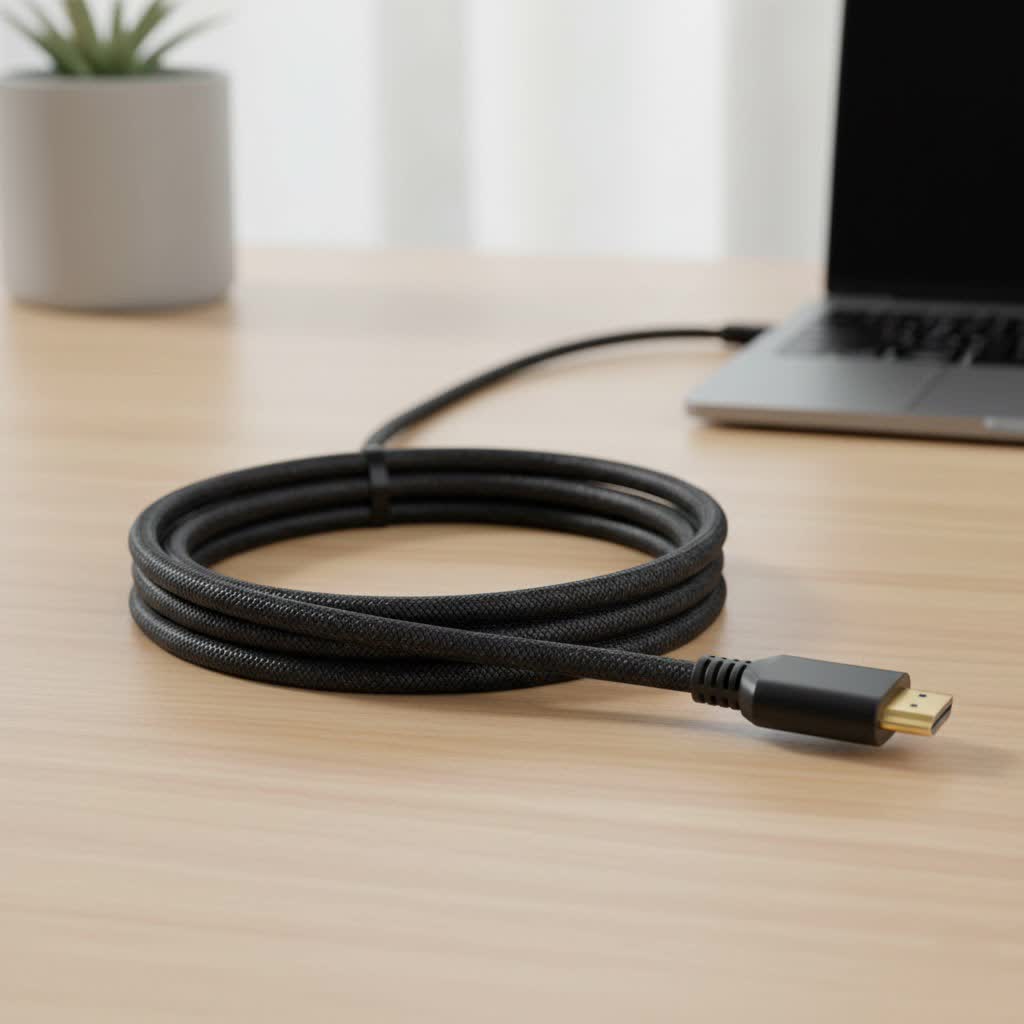
What Exactly Is an Ultra High Speed HDMI Cable?
An Ultra High Speed HDMI Cable is the official name for the cable designed to support the features of the HDMI 2.1 specification. Think of it as the superhighway for your audio and video data. While older cables were sufficient for HD and basic 4K, they simply don’t have the bandwidth for the massive amount of information required by today’s most advanced devices.
This cable is the only one engineered and certified to handle up to 48 Gigabits per second (Gbps) of data. This massive increase in bandwidth is what enables a host of next-generation features that are impossible to achieve with older High Speed cables, which top out at 18Gbps.
The Key Features Unlocked by This Cable
Upgrading to an Ultra High Speed HDMI Cable isn’t about a minor improvement; it’s about unlocking a whole new tier of performance from your compatible devices. It ensures you’re getting every pixel and every sound wave you paid for.
8K at 60Hz and 4K at 120Hz Explained
|
Our Picks for the Best HDMI Cable in 2026
As an Amazon Associate I earn from qualifying purchases.
|
||
| Num | Product | Action |
|---|---|---|
| 1 | Highwings 8K@60 HDMI Cable 10FT/3M, 48Gbps 2.1 High Speed HDMI Braided Nylon 4K120 144Hz RTX 3090 eARC HDR10 4:4:4 HDCP 2.2&2.3 Compatible for PS5, PS4, UHD TV and PC |

|
| 2 | Anker HDMI Cable 8K@60Hz, 6FT Ultra HD 4K@120Hz HDMI Cord,48 Gbps Certified Ultra High-Speed,Compatible with PlayStation 5,Xbox,Samsung TVs,and More |
|
| 3 | Highwings Long HDMI Cable 20 FT, 10K 8K 4K Ultra HD High Speed 2.1 HDMI Cable 48Gbps Braided Cord-4K@120Hz 8K@60Hz, DTS:X, HDCP 2.2&2.3, Dynamic HDR 10 Compatible with Roku TV/PS5/HDTV/Blu-ray |
|
| 4 | Short HDMI Cable 1 FT 2-Pack, 8K HDMI 2.1 48Gbps Ultra High Speed Braided HDMI Cords, 1 Foot HDMI Cable for Camera, Field Monitor, External Recorder, Laptop, PC |
|
| 5 | 10K 8K HDMI 2.1 Cable 2-Pack 6.6FT, Highwings Certified 48Gbps Ultra High Speed Slim HDMI Cord,Support 4K@120Hz 8K@60Hz, HDCP 2.2&2.3, Dynamic HDR,eARC,DTS:X, Compatible with Roku TV/HDTV/PS5/Blu-ray |
|
| 6 | Highwings 8K 10K 4K HDMI Cable 48Gbps 6.6FT/2M, Certified Ultra High Speed HDMI Cable Braided Cord-4K@120Hz 8K@60Hz, DTS:X, HDCP 2.2 & 2.3, HDR 10 Compatible with Roku TV/PS5/HDTV/Blu-ray |
|
| 7 | 15 Pack of 10 Foot hdmi Cables |
|
| 8 | Highwings Long HDMI Cable 15 FT, 4K 8K 10K HDMI 2.1 Cord Ultra High Speed [in-Wall CL3 Rated, 8K@60Hz 4K@120Hz Video 48Gbps], Fit, Durable, Flexible, eARC, HDCP, Compatible for Ethernet SoundBar |
|
| 9 | Highwings 4K HDMI Cable 6.6FT/2m - High-Speed HDMI 2.0 Quality Cord 4K@60Hz, Braided Nylon & Gold Connectors, HDR, Ethernet, ARC, 3D, HDCP 2.2, Compatible for PS-5/4/3/ HDTV/Monitor/DVD/Streaming |
|
| 10 | Highwings High Speed 8K 60Hz HDMI Cable 3.3FT/1M, 2.1 48Gbps HDMI Braided Cable-4K@120Hz 7680P,DTS:X,HDCP 2.2 & 2.3, HDR 10,eARC,Dynamic HDR,Compatible for Laptop, Monitor, Roku TV |
|
The headline feature is support for higher resolutions and faster refresh rates. An Ultra High Speed cable can transmit an 8K video signal at a smooth 60 frames per second (fps) or a 4K signal at an incredibly fluid 120 fps. For gamers, 4K at 120Hz means buttery-smooth gameplay with a significant competitive edge. For cinephiles, 8K at 60Hz offers an unparalleled level of detail and realism.
Dynamic HDR: A Game-Changer for Visuals
Standard High Dynamic Range (HDR) improves contrast and color, but it uses a single set of instructions for an entire movie or game. Dynamic HDR takes this a step further by adjusting brightness, contrast, and color on a scene-by-scene or even frame-by-frame basis. The result is a much more nuanced and visually stunning picture where every moment is perfectly optimized.
Enhanced Audio Return Channel (eARC)
If you own a high-end soundbar or a complex AV receiver, eARC is for you. It’s a major upgrade to the standard ARC, allowing you to send full-resolution, uncompressed audio formats like Dolby Atmos and DTS:X from your TV back to your audio system. This simplifies your setup without sacrificing a single bit of audio quality.
“I can’t tell you how many service calls I’ve done where the client’s new Dolby Atmos system wasn’t working, only to find they were using an old HDMI cable. eARC requires the bandwidth of an Ultra High Speed cable to pass that uncompressed audio. It’s a common oversight,” shares Johnathan Miles, a home theater installer with over a decade of experience.
Gaming-Specific Features: VRR, ALLM, and QFT
The HDMI 2.1 specification, delivered by the Ultra High Speed cable, introduced a trio of features that every serious gamer needs:
- Variable Refresh Rate (VRR): This feature synchronizes your TV’s refresh rate with your console’s or PC’s frame rate in real-time. This eliminates screen tearing and stuttering for a much smoother experience.
- Auto Low Latency Mode (ALLM): Also known as “Game Mode,” ALLM allows your console to automatically tell your TV to switch to its lowest-latency setting, reducing input lag without you having to touch the remote.
- Quick Frame Transport (QFT): This reduces display latency by sending frames at a higher rate, which can make games feel more responsive.
Do You Actually Need an Ultra High Speed HDMI Cable?
This is the big question. The answer depends entirely on the devices you own or plan to buy. Here’s a quick breakdown to help you decide:
-
You absolutely need one if:
- You own a PlayStation 5, Xbox Series X, or a high-end PC with an HDMI 2.1-capable graphics card and want to play games at 4K 120Hz.
- You have an 8K television and want to watch native 8K content.
- You are using a soundbar or AV receiver with eARC to listen to uncompressed audio formats like Dolby Atmos.
-
You probably don’t need one if:
- Your TV’s maximum resolution is 1080p or 4K at 60Hz. A standard High Speed cable will work perfectly fine.
- You primarily use streaming sticks or older consoles like the PlayStation 4 or Nintendo Switch.
- Your sound system only uses standard ARC or an optical connection.
High Speed vs. Ultra High Speed HDMI Cable
The difference is all about bandwidth and the features it enables. While they look identical, their capabilities are worlds apart.
| Feature | High Speed HDMI Cable | Ultra High Speed HDMI Cable |
|---|---|---|
| Max Bandwidth | 18 Gbps | 48 Gbps |
| Max Resolution | 4K @ 60Hz | 8K @ 60Hz, 4K @ 120Hz |
| Dynamic HDR | No | Yes |
| eARC | No | Yes |
| VRR, ALLM, QFT | No | Yes |
| Certification | Premium High Speed Certified | Ultra Certified Cable |
How to Spot a Genuine Certified Cable
To combat counterfeit and underperforming products, the HDMI Licensing Administrator, Inc. created a mandatory certification program. Every genuine Ultra High Speed HDMI Cable must pass rigorous testing.
To ensure you’re buying a legitimate product, look for the Ultra Certified Cable label on the packaging. This label features a hologram and a QR code. You can scan the QR code with the official HDMI Cable Certification app on your smartphone to verify that the cable is authentic. Avoid cables that make vague claims like “8K Ready” or “HDMI 2.1 Compliant” without displaying this official certification label.
Frequently Asked Questions (FAQ)
Is “HDMI 2.1 Cable” the right name to search for?
No, the official name is “Ultra High Speed HDMI Cable.” While it’s designed for the HDMI 2.1 specification, the term “HDMI 2.1 cable” is technically incorrect and often used by uncertified products. Always search for the official name and look for the certification sticker.
Will an Ultra High Speed cable improve my 1080p TV’s picture quality?
No, it will not. A cable’s job is to transmit the signal it’s given. It cannot improve the source signal or make a lower-resolution TV display a higher resolution. A standard High Speed cable is perfectly sufficient for 1080p content.
Are more expensive Ultra High Speed HDMI cables better?
Generally, no. As long as a cable has the official Ultra Certified Cable label, it has passed the same tests and will perform to the full 48Gbps specification. An expensive, certified cable will not provide a better picture or sound than a more affordable, certified one. Price differences usually come down to brand name, build materials, or length.
Is this cable backward compatible?
Yes, it is fully backward compatible. You can use an Ultra High Speed HDMI Cable to connect any two HDMI devices, and it will work just like a standard cable. However, you will only get the advanced features if both the source device (e.g., a PS5) and the display (e.g., your TV) support them.
What is the maximum recommended length for these cables?
For passive cables (the most common type), reliability can decrease significantly after about 3 meters (around 10 feet). If you need a longer run, you should look for an active optical HDMI cable, which can carry the signal over much longer distances without degradation.
The Final Connection
Choosing the right cable is the final, crucial step in building a modern entertainment system. While a basic High Speed cable still has its place, it acts as a bottleneck for the powerful devices of today and tomorrow. By investing in a certified Ultra High Speed HDMI Cable, you are not just buying a wire; you are unlocking the full visual and auditory experience that your 8K TV, next-gen console, and high-fidelity audio system were built to deliver. Don’t let your connection be the weakest link.
